Slab Leak Detection & Repair in Reno, NV
Reno slab leaks play by different rules than the desert cities to the south. Here in the Truckee Meadows, it's not just hard water and soil working on your pipes — it's winter. Freeze-thaw cycles split weakened copper, expansive clay soils in South Reno heave and settle around slabs, and the 1940s–70s homes of Midtown and Old Southwest are running on plumbing that's simply old. Our same-day pros provide slab leak detection and repair across Reno, Nevada, using acoustic listening, thermal imaging, and tracer-gas testing to pinpoint leaks within inches — before winter turns a pinhole into a burst line. Whether it's a warm patch on the floor in Damonte Ranch, a spiking water bill in Northwest Reno, or the sound of running water under a quiet Old Southwest bungalow, we confirm the diagnosis in a single visit and hand you a written repair estimate. Every week a leak runs, it saturates soil, threatens your foundation, and feeds mold in the sealed cavity under your slab. Call today for same-day slab leak detection in Reno.
Neighborhoods We Serve in Reno
Downtown Reno, Midtown, Old Southwest, Northwest Reno, South Reno, Damonte Ranch, Somersett, Caughlin Ranch, North Valleys, Stead — and every ZIP code in between.
Why Reno Homes Get Slab Leaks
Reno's Truckee Meadows mix sandy high-desert soils with pockets of highly expansive clay — especially across South Reno and Damonte Ranch — that swell when wet and shrink when dry, heaving slabs and stressing buried pipe. At 4,500 feet, winter freeze-thaw cycles are the defining hazard: water expands about 9% when it freezes, splitting corrosion-weakened copper and fatiguing joints. Add a seismic zone and 1940s–70s plumbing, and Reno's slab-leak profile looks nothing like the southern desert's.
Why Reno Homes Get Slab Leaks
Reno's slab leaks come from a collision of age, climate, and soil that you won't find in Las Vegas or Phoenix. Start with the housing stock: Midtown, Old Southwest, and the neighborhoods around downtown hold thousands of homes built from the 1940s through the 1970s, many still running on original copper — or worse, galvanized steel — water lines now 50 to 80 years old. Galvanized pipe was already past its life expectancy decades ago; it corrodes from the inside until the walls are paper-thin. Then add the climate. Reno sits at 4,500 feet in the high desert, where winter nights routinely plunge below freezing and spring brings rapid freeze-thaw cycling. Water expands roughly 9% when it freezes, so a copper line already thinned by corrosion can split wide open during a hard cold snap — and even without a full burst, repeated freezing and thawing flexes every buried joint, turning pinholes into streams over a single winter. The soil completes the assault. Pockets of expansive clay across South Reno, Damonte Ranch, and parts of the North Valleys swell dramatically when wet and shrink when dry; a slab leak keeps the ground under one section of foundation permanently saturated, so the slab rides up and down unevenly, stressing pipes further and cracking the concrete they run through. Reno is also in seismic country, and even minor tremors shift buried lines. Newer construction in Somersett, Caughlin Ranch, and the North Valleys largely uses PEX — far more forgiving — but the older core of the city is living on borrowed plumbing time, and winter collects the debt.
Signs of a Slab Leak in Reno Homes
Because Reno's leaks are so often tied to winter and aging pipe, the signs deserve a seasonal eye. The year-round classics still apply: a warm or hot patch on tile or laminate flooring (a hot-water line leaking below), a water bill that jumps with no change in usage, and the sound of hissing or running water through the floor in a quiet house. But in Reno, pay special attention after the first hard freeze — a line that survived summer as a seep can become a gusher by January, so a December water bill spike in an older Midtown or Old Southwest home is a red flag, not a mystery. Low water pressure at fixtures, damp carpet edges, musty odors that cleaning can't remove, and grout lines that darken or crumble all point below the slab. Foundation-related symptoms matter more here than in most markets: new diagonal cracks in drywall, doors that suddenly stick, or a section of flooring that feels uneven can mean expansive clay under South Reno and Damonte Ranch slabs is reacting to leak-fed moisture. Outside, look for soil against the foundation that stays damp or oddly lush through winter, when everything else is dormant. In two-story homes, a first-floor ceiling stain can trace back to ground-floor slab moisture wicking upward through wall cavities. And if your water heater seems to run constantly in winter, it may be reheating water that's escaping under the house rather than fighting the cold. Two or more of these signs together mean it's time for professional detection — not next month, before the next freeze.
How We Detect Slab Leaks in Reno
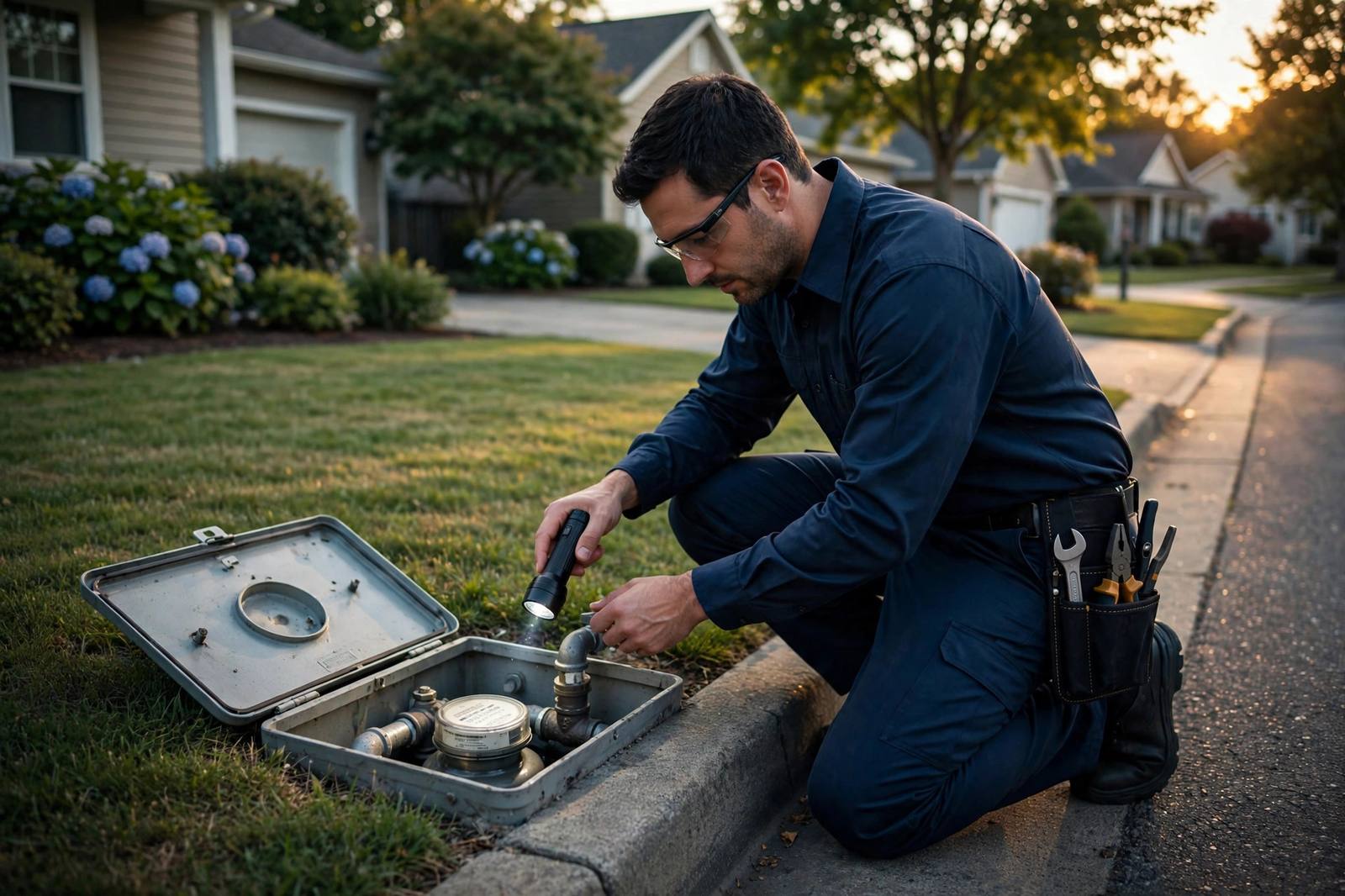
Finding a leak under concrete is an instrumentation job, and Reno's conditions demand a technician who understands them. Every detection visit starts with meter and pressure testing to confirm a leak exists and to isolate the failing system — hot-water line, cold-water line, or drain — since each calls for a different strategy. In winter, we pay close attention to which lines run near exterior walls or through unconditioned spaces, because freeze-weakened sections fail first and the acoustic signature differs from a corrosion pinhole. Electronic acoustic listening comes next: escaping pressurized water produces a distinct high-frequency sound, and our sensors trace it through the slab to the loudest point, mapping the buried line's path. Thermal imaging adds the visual layer — a hot-water leak warms the concrete above it, and the infrared camera renders that heat plume in real time, often narrowing the search to an area the size of a dinner plate. For cold-water lines or extremely small breaches, we isolate the suspect line, introduce a safe tracer gas, and sweep the slab with a sniffer that detects gas escaping through the concrete at the exact failure point. Moisture meters and compact inspection cameras then map how far saturation has spread — critical information in Reno, where expansive clay means the moisture footprint determines whether you're facing a pipe repair or a pipe repair plus foundation stabilization. The visit takes 60 to 90 minutes, and you receive the marked location, photos of the findings, and a written estimate covering every repair option.
Slab Leak Repair Options in Reno
With the leak precisely mapped, Reno homeowners typically consider three repair paths — and the city's freeze-thaw reality reshapes the usual advice. The direct spot repair is fastest: we open the slab at the marked location, remove the failed section, and splice in new pipe, usually in a single day. It's the right call for an isolated failure in otherwise healthy plumbing. Tunneling — digging a narrow access tunnel beneath the slab from outside the foundation and repairing from below — costs more in labor but leaves your finished floors untouched, which matters in homes with hardwood or tile that would be expensive to replace. But Reno's older housing stock pushes many homeowners toward the third option: a whole-home reroute. In a 1950s–60s Midtown or Old Southwest home with original copper or galvanized lines, one leak is rarely the last — and every winter is another round of freeze-thaw stress on the remaining pipe. A reroute abandons the under-slab lines permanently and runs new PEX overhead through the attic and down interior walls. PEX expands slightly rather than bursting when water freezes inside it, it ignores the corrosion that kills metal pipe, and it means no one ever breaks your concrete for plumbing again. For the newer PEX-plumbed homes of Somersett, Damonte Ranch, and the North Valleys, a spot repair is usually the whole story. We'll evaluate your pipe's age and material during detection and price every option honestly, so the recommendation fits your home — not a quota.
What Slab Leak Detection & Repair Costs in Reno
A professional slab leak detection visit in Reno runs $175 to $450 — meter and pressure testing, acoustic location, thermal imaging, a marked leak location, and a written repair estimate, all in about 60 to 90 minutes. That diagnostic precision is the best value in the project because it eliminates exploratory demolition. A direct spot repair at one pinpointed location typically costs $2,200 to $6,500, varying with pipe depth, hot versus cold line, and the flooring that must come up and go back down. Tunneling under the slab from outside runs higher on labor but can be the economical total when expensive flooring is at stake. A whole-home reroute — new PEX replacing aging copper or galvanized — generally falls between $4,000 and $10,000+ for a typical Reno single-story, scaling with square footage and fixture count; in freeze-prone older homes, many owners view it as winter-proofing as much as plumbing. The cost driver that dwarfs the rest is delay compounded by climate: a pinhole that seeps through fall can become a burst line in January, and a burst line means emergency rates plus far more water damage. On insurance, most Nevada policies exclude the pipe fix as wear and tear but cover resulting damage — slab access, ruined flooring, water remediation — and freeze-related bursts are sometimes covered more readily than slow corrosion leaks. Keep your water bills and our detection report; adjusters ask for both.
What to Do When You Suspect a Slab Leak
Start with the free test that never lies: shut off every faucet, toilet, appliance, and irrigation zone, then watch your water meter for 15 minutes. Movement with everything off means water is escaping — and in a Reno home, the slab is suspect number one. If you hear an active rush or see water pooling, close the main shutoff valve immediately; pressurized flow erodes the soil under your slab, and in expansive-clay areas like South Reno, saturation plus swelling is the fast track to foundation damage. Next, document everything: photograph damp flooring and any new drywall cracks, note warm spots by room, and gather recent water bills showing the spike — this file is the backbone of an insurance claim. If the weather is freezing, keep the heat on and open cabinet doors on exterior plumbing walls; you want to prevent a weakened line from becoming a burst line before we arrive. Run a dehumidifier near damp areas if you smell mustiness — the EPA's 24-to-48-hour mold window applies even in the high desert, because the sealed cavity under a slab stays wet. Don't hire whoever can jackhammer first; without electronic detection, you're paying for holes in your foundation on a guess. A specialist with acoustic and thermal gear locates the leak before touching concrete. Finally, schedule same-day detection — our Reno technicians confirm the diagnosis, mark the exact spot, and deliver a written estimate in one visit, so you face winter with a plan instead of a ticking pipe.
Get a Pinpoint Diagnosis in Reno
No jackhammer guesswork. Thermal imaging + acoustic equipment finds your leak within inches.
☎ Call (877) 762-1902Reno Slab Leak FAQs
How much does slab leak detection cost in Reno, NV?
A complete professional detection visit in Reno costs $175–$450, covering pressure and meter testing, acoustic electronic listening, thermal imaging, a marked leak location, and a written repair estimate — usually finished in 60 to 90 minutes. Given how freeze-thaw cycles here can turn a small leak into a burst pipe over one winter, that diagnostic precision is money well spent.
Do Reno's freezing winters cause slab leaks?
They're a real accelerant. Water expands about 9% when it freezes, and in Reno's high desert, winter nights drop well below freezing. A copper line already thinned by decades of corrosion — common in Midtown and Old Southwest homes — can split open during a hard freeze. Even without a burst, repeated freeze-thaw flexing fatigues joints and turns pinholes into streams. Insulating exposed lines and keeping heat on during cold snaps helps; aging buried copper should be evaluated before winter.
Will homeowners insurance cover a slab leak in Reno?
Often partially. Nevada policies generally exclude the failed pipe itself as wear and tear but cover resulting damage — breaking through the slab, replacing flooring, repairing water damage. Freeze-related bursts are sometimes covered more readily than slow corrosion leaks, depending on your policy language. Document your water bills and keep our written detection report for the adjuster.
How do I know if a slab leak is damaging my foundation?
Start outside. Reno's expansive clay soils — especially in South Reno and Damonte Ranch — swell when wet and shrink when dry, and a slab leak keeps the soil under one section of your foundation permanently saturated. Watch for new cracks in drywall, doors that start sticking, or flooring that buckles in one area. If you see those alongside a high water bill or warm floor spots, call for detection immediately rather than assuming it's normal settling.
How long does slab leak repair take in Reno?
A spot repair is typically done in one day. Tunneling takes one to two days. A whole-home reroute for aging copper or galvanized — common in Reno's 1940s–70s housing stock — takes two to four days depending on home size. Detection is a same-day, 60–90 minute visit, so most homeowners have a confirmed diagnosis and written estimate within 24 hours of calling.
Should I repair the leak or reroute my plumbing in Reno?
If your Reno home still has original 1950s–70s copper or any galvanized pipe and you've had a leak, a reroute is usually the smarter investment — Reno's freeze-thaw cycles punish old metal relentlessly, and a second failure is likely. For younger copper with an isolated failure, a spot repair or tunneling fix is typically the right, economical choice.
Nearby Cities
Keep Learning
Does Homeowners Insurance Cover Slab Leaks?
Does homeowners insurance cover slab leaks? Usually the water damage, not the pipe itself. What's covered, exclusions, claim tips,…
Epoxy Pipe Lining vs Repiping for Slab Leaks
Epoxy pipe lining vs repiping for slab leaks: real costs ($80-$250/ft vs $4.5k-$15k), lifespan, pros, cons, and limits. Which whol…
Can a Slab Leak Be Fixed Without Breaking Concrete?
Can a slab leak be fixed without breaking concrete? Yes. Rerouting, epoxy lining, and tunneling explained with real costs, timelin…