Slab Leak Detection & Repair in Tucson, AZ
Tucson's slab leak story has its own desert rhythm. Year-round hard water and corrosive alkaline soil quietly thin the copper under your slab, and then monsoon season arrives with violent downpours that saturate and shift the ground around your foundation. The result is a city full of pinhole leaks, from original copper in Midtown, Sam Hughes, and Barrio Viejo bungalows to 1990s runs under Tanque Verde and Northwest Tucson tract homes. Because nearly every Tucson home sits on a slab with the plumbing running beneath it, a leak you cannot see can waste thousands of gallons and wreck flooring before you realize what is happening. Our Tucson slab leak team brings electronic acoustic detection and thermal imaging to your door the same day you call, pinpointing the leak within inches and pricing every repair option up front. Whether the right answer is a targeted spot repair, a tunnel that preserves your Saltillo tile, or a permanent overhead reroute, you will know exactly what it costs and how long it takes before any concrete is touched.
Neighborhoods We Serve in Tucson
Catalina Foothills, Midtown, Sam Hughes, Barrio Viejo, Rincon Valley, Tanque Verde, East Tucson, Northwest Tucson, Vail, Downtown Tucson — and every ZIP code in between.
Why Tucson Homes Get Slab Leaks
Tucson sits higher and cooler than Phoenix but shares the same hostile chemistry: hard, mineral-laden water plus alkaline desert soil that corrodes copper from the outside in. Caliche hardpan layers are widespread and drain poorly, so leak water can pool against the foundation. The defining local factor is the monsoon cycle, months of dry soil followed by intense storms that saturate and shift the ground around the slab, stressing pipes already thinned by corrosion. Slab-on-grade construction is standard and basements are essentially nonexistent.
Why Tucson Homes Get Slab Leaks
Tucson gives copper pipes a hard life, and the failure pattern is remarkably consistent. The municipal water is hard, and in much of the city it is also aggressive enough to thin copper walls from the inside over decades. Meanwhile the surrounding soil is alkaline and attacks the same pipe from the outside. That inside-outside corrosion is the core reason pinhole leaks are the signature slab leak of the Old Pueblo. Layer on the monsoon cycle: ten months of dry, stable soil, then violent summer storms that saturate the ground, swell it, and shift it around the slab. Pipes that are already paper-thin from corrosion cannot absorb that movement, so late summer is our busiest season. The housing stock writes the rest of the story. Midtown, Sam Hughes, and Barrio Viejo hold adobe and ranch homes from the 1940s through the 1970s with original copper now well past its design life. Rincon Valley, Tanque Verde, Vail, and the Northwest side grew in the 1980s and 90s; that copper is younger but hitting the age where pinholes begin, especially on hot-water runs that expand and contract daily. Caliche, the cemented hardpan common around Tucson, resists drainage, so leak water can perch against the foundation instead of draining away, accelerating corrosion on neighboring runs. Even Catalina Foothills estates with premium construction are not exempt, since long copper runs under sprawling floor plans multiply the failure points. When one pinhole appears in this environment, more are usually coming, which is why the diagnostic visit focuses as much on the pipe's overall condition as on the single leak.
Signs of a Slab Leak in Tucson Homes
Most homeowners find out through the water bill. Tucson Water bills on usage, so an under-slab leak that runs around the clock shows up as a bill that jumps a tier with no change in your habits. Confirm it with the meter test: shut off everything, including the irrigation controller, and watch the leak-indicator dial for 15 minutes. Movement means you are losing water. Next come the physical signs. A hot-water-line leak warms the slab above it, so walk the house barefoot early in the morning, before the day's heat masks the signal, and feel for warm strips on tile or concrete. Listen for water moving when nothing is running, a faint hiss or rush near kitchens and bathrooms that stops when you kill the main valve. Flooring tells the truth too: grout that never quite dries, laminate edges that cup, carpet that smells musty, baseboards that swell or pull away from the wall. In homes with Saltillo or Mexican tile, you may see darkening around individual tiles where moisture wicks up. Outside, look for soggy spots along the foundation after dry weather, or a patch of desert landscaping that suddenly looks healthier than the rest. A water heater that fires constantly to keep up can also signal a hot-side leak. Because Tucson soil is dry most of the year, any dampness that has no sprinkler explanation deserves a same-day detection visit.
How We Detect Slab Leaks in Tucson
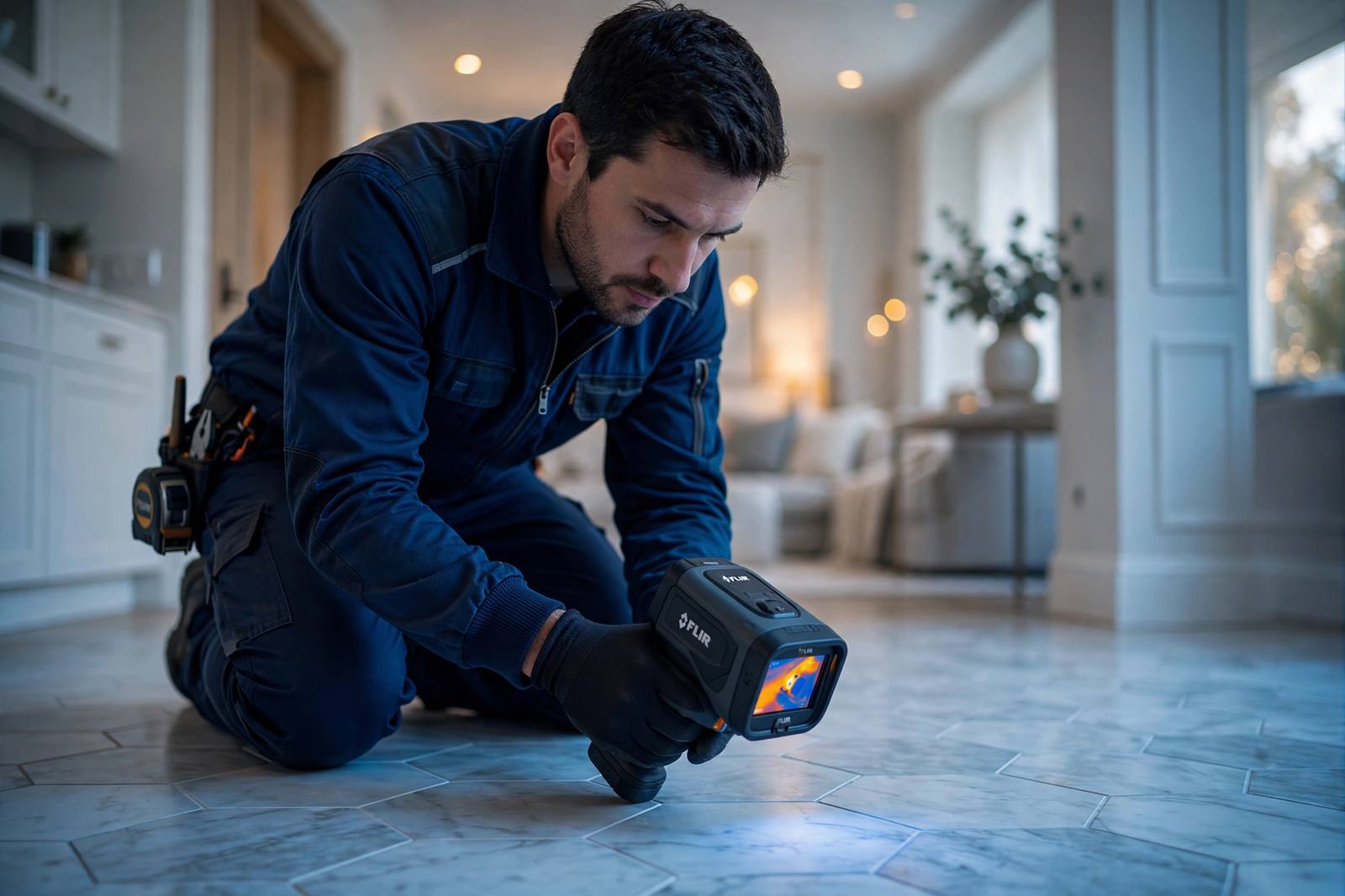
The process starts with a pressure test that tells us whether the hot side, the cold side, or a drain is losing water, which immediately narrows the search. Then we deploy electronic acoustic equipment: sensitive ground microphones and correlators that translate the sound of pressurized water escaping a pinhole into a location we can mark on the slab. Tucson's warm ambient temperatures make thermal imaging especially useful on hot-line leaks, because an infrared camera can read the heat plume spreading through the concrete even when the surface feels uniformly warm to a hand. We scan the slab systematically and cross-check the warmest anomalies against the acoustic hits. Where the pipe path is unclear, electromagnetic line tracing maps the run so we know exactly where to listen, and moisture meters along baseboards and door jambs confirm which rooms the water has reached. The whole visit takes one to two hours, and you receive a written report with the leak location marked, the line and likely cause identified, photographs, and every repair option priced in writing. We run same-day detection across the metro, from Downtown Tucson lofts to Rincon Valley ranch properties. The point of all this technology is simple: the jackhammer should only touch concrete after the leak's position is known within inches, and never before.
Slab Leak Repair Options in Tucson
With the leak located, you have three repair paths, and Tucson's soil and housing stock push different homes toward different answers. A spot repair opens a small section of concrete directly over the leak, replaces the failed section of pipe, and patches the slab. It is a one-day job in most cases and the right call when the rest of the copper tests sound and the leak looks like an isolated failure. Tunneling preserves your floors. Rather than breaking through Saltillo tile, hardwood, or stained concrete from above, technicians hand-dig an access tunnel beneath the slab, repair the pipe from below, and backfill. It is slower and more expensive, but in Catalina Foothills and Sam Hughes homes with irreplaceable finishes, saving the floor pays for itself. The third option is an overhead reroute: abandon the under-slab line and run new PEX through the attic and down interior walls. Because Tucson's alkaline soil is the root cause of most pinhole failures, a reroute removes the pipe from the enemy entirely, and it is the fix we recommend most for homes that have already had one pinhole. For houses with original copper and multiple leaks, a whole-home repipe through the attic is usually cheaper over five years than chasing pinholes one by one. We lay out the cost, timeline, and flooring impact of each option side by side so you can choose with complete information.
What Slab Leak Detection & Repair Costs in Tucson
Professional detection in Tucson runs $185 to $425 for a full visit: acoustic survey, thermal imaging, pressure testing, line tracing as needed, and the written report. Single-leak spot repairs typically cost $2,000 to $4,000 including concrete removal, the pipe repair, backfill, and a concrete patch. Tunneling for one leak generally lands between $3,500 and $6,200, since hand-digging under a slab in caliche-heavy soil is painstaking work. An overhead reroute of a single line usually costs $2,400 to $4,200, and a whole-home attic repipe runs $5,000 to $12,000 depending on square footage and fixture count. Local factors that move the price include caliche depth, which slows any digging, and monsoon timing: saturated soil is harder to tunnel through, so dry-season scheduling can save labor hours. Flooring matters too; cutting and patching through Saltillo or large-format tile costs more than through carpet. What should never move the price is guesswork. Any quote given before electronic detection has located the leak is a guess, and guesses in Tucson end with exploratory demolition. We price from a marked leak location with photos, in writing, before any work begins, and we will tell you plainly when a reroute at $3,000 is smarter than a spot repair that the same corrosive soil will defeat again within a couple of years.
What to Do When You Suspect a Slab Leak
Start with the meter test to confirm the leak: everything off, including irrigation, then watch the dial for 15 minutes. Next, locate your main shutoff, usually at the front hose bib or where the line enters the garage, and verify it turns. You do not have to kill the water for a slow leak, but be ready if it worsens. Photograph any damp spots, warm-floor areas, or swollen baseboards, and pull your last few water bills to document the spike; this file helps your plumber, and it is gold if you file an insurance claim. Call a slab leak specialist, not a generalist, because you need electronic location, not exploratory concrete removal. While waiting for the appointment, cut back on hot-water use if the leak is on the hot side, and move anything valuable off damp flooring. Do not wait and see: a pressurized pinhole never heals, and Tucson's summer heat can turn trapped moisture into a mold problem in days. And never let anyone break concrete before the leak is electronically pinpointed. The correct order is detect, price, then repair, and with same-day detection available across Tucson, you can go from suspicion to a firm, written repair plan in about 24 hours.
Get a Pinpoint Diagnosis in Tucson
No jackhammer guesswork. Thermal imaging + acoustic equipment finds your leak within inches.
☎ Call (877) 762-1902Tucson Slab Leak FAQs
Why do slab leaks seem to spike during Tucson monsoon season?
Monsoon saturation is the wildcard. Most of the year Tucson's soil is bone dry, but intense summer storms dump inches of rain in hours, saturating the ground around foundations and shifting the soil that cradles your pipes. Older copper in neighborhoods like Midtown and Barrio Viejo is already thinned by decades of hard water, so the combination of movement and corrosion makes late summer a peak season for pinhole leaks in the Old Pueblo.
Are slab leaks common in older Tucson homes?
Yes. Decades of hard water thin copper walls from the inside while Tucson's alkaline soil works from the outside, and monsoon soil movement stresses the weakened pipe. Homes in Midtown, Sam Hughes, and Barrio Viejo still running original copper are the most frequent calls, but even 1990s builds in Tanque Verde and the Northwest are reaching the age where pinholes start appearing.
How can I tell if I have a slab leak before calling someone?
Do the 15-minute meter test with everything off, including irrigation. A moving dial means water is escaping. In slab-on-grade homes the most telling physical clues are warm spots on floors from hot-line leaks, the sound of running water when fixtures are off, damp baseboards or grout, and water bills that jump between billing cycles without a change in usage.
Does homeowners insurance cover slab leaks in Tucson?
Most Arizona carriers cover resulting water damage but not the pipe fix itself, and concrete-access coverage varies by policy. Sudden leaks are treated more favorably than slow seepage, so report promptly. Before filing, get a written detection report with the leak location and photos, plus your billing history, since a documented timeline makes the adjuster's job easier and your claim stronger.
Should I repair the leaking spot or reroute the line overhead?
It depends on the pipe's overall condition. One clean leak in an otherwise healthy line is a good spot-repair candidate. But in homes where alkaline soil has already caused pinholes, new ones tend to follow along the same run. An overhead reroute through the attic takes the pipe out of the corrosive soil permanently, which is why it is the most common recommendation for repeat pinhole leaks in Tucson.
How long will the repair take?
Detection takes one to two hours. A spot repair is usually done in a day. Tunneling takes two to four days depending on how much caliche is under the slab. Overhead reroutes run one to three days, and a full repipe three to five. Flooring restoration after a spot repair adds time beyond the plumbing itself, so factor that into your planning.
Nearby Cities
Slab leak pros nearbyGlendale
Slab leak pros nearbyMesa
Slab leak pros nearbyPhoenix
Slab leak pros nearbyScottsdale
Slab leak pros nearby
Keep Learning
How Long Does Slab Leak Repair Take? Realistic Timelines
How long does slab leak repair take? Spot repairs: 1 day. Reroutes: 1-2 days. Tunneling: 2-4 days. Realistic timelines, costs, and…
How Plumbers Find Slab Leaks: 5 Detection Methods Explained
How do plumbers find slab leaks? Acoustic listening, thermal imaging, tracer gas, pressure tests and cameras explained — methods, …
Selling a House With a Slab Leak: Disclosure & Value
Selling a house with a slab leak? Learn disclosure rules, how leaks affect home value, repair-vs-as-is math, and the paperwork tha…