Slab Leak Detection & Repair in Glendale, AZ
When a water line breaks under your concrete slab in Glendale, every hour of delay lets water erode soil, crack flooring, and feed mold you can't see. Our same-day pros specialize in slab leak detection and repair across Glendale, Arizona — from the 1950s ranch homes of the Yucca District to the 1980s and 90s tracts of Arrowhead Ranch. We use acoustic listening, thermal imaging, and line-isolation testing to pinpoint leaks within inches, so repair means one small, precise opening instead of tearing up your floors. Glendale's brutal summer heat, rock-hard caliche soil, and extremely hard water make pinhole copper leaks one of the most common plumbing emergencies here — and the original copper in older central Glendale homes is exactly the right age to start failing. If your water bill spiked, a floor feels warm, or you hear water running when nothing is on, call for same-day slab leak detection in Glendale before a small leak becomes a five-figure repair.
Neighborhoods We Serve in Glendale
Downtown Glendale, Arrowhead Ranch, Westgate, Yucca District, Ocotillo District, Thunderbird, Northern Crossing — and every ZIP code in between.
Why Glendale Homes Get Slab Leaks
Glendale sits on desert caliche — a cement-like layer of calcium carbonate just below the surface — over highly alkaline soil. That alkalinity is corrosive to copper from the outside, which is why pinhole leaks in buried copper lines are the #1 slab-leak story across the West Valley. Slab-on-grade construction is nearly universal here, summer soil temperatures swing wildly as 110°F+ heat bakes the ground by day, and the expansion-contraction cycle stresses copper joints year after year.
Signs of a Slab Leak in Glendale Homes
The classic Glendale slab leak announcement is a warm spot on your tile floor — usually a hot-water line leaking underneath, and one of the most common calls we get from Arrowhead Ranch and Thunderbird homeowners. But leaks rarely announce themselves that politely. Watch for a City of Glendale water bill that jumps $50, $100, or more with no change in your usage; that extra water is going somewhere, and under the slab is the usual answer. Put your ear to the floor (or a wall near the floor) in a quiet house: if you hear hissing or the sound of running water when every fixture is off, you likely have a pressurized line leaking below. Low water pressure at fixtures, damp or discolored carpet edges, a musty smell that air freshener can't kill, and cracks appearing in tile grout or the slab itself all point the same direction. In older ranch homes near Downtown Glendale and the Yucca District, check for warm or soft spots in the soil right outside the foundation — a leak can saturate the caliche and push moisture up along the stem wall. Another tell: your water heater runs constantly because it's reheating water that's escaping under the house. If you're seeing two or three of these signs together, don't wait for the floor to buckle. A same-day detection visit in Glendale confirms exactly where the leak is before damage spreads, and catching it early is the difference between a targeted repair and replacing flooring across multiple rooms.
Why Glendale Homes Get Slab Leaks
Glendale is close to a perfect storm for slab leaks, and it starts with the climate. Summer highs regularly top 110°F, and while your attic gets the headlines, your slab bakes too — buried copper lines expand in the heat and contract when desert nights cool the ground, flexing joints and fittings thousands of times a year until weak points give way. Then there's the soil: Glendale's caliche and alkaline desert dirt are corrosive to copper from the outside in. Combine that with some of the hardest municipal water in the country working on the inside of the pipe, and copper gets attacked from both sides at once — the textbook recipe for pinhole leaks. Housing stock completes the picture. Central Glendale, the Yucca and Ocotillo Districts, and older pockets near downtown are full of 1950s through 1970s ranch homes running on their original copper, now 50 to 70 years old and squarely in the failure window. Meanwhile the big Arrowhead Ranch and Westgate-area tracts went up in the 1980s and 90s — their copper is 30 to 40 years old and entering the same danger zone, often failing right on schedule. Slab-on-grade construction is nearly universal across the West Valley, so there's no crawlspace to catch a drip; the first sign of trouble is often damage to the finished floor above. Add in the occasional shifting from monsoon-season soil saturation, and Glendale homes face more slab-leak pressure than almost anywhere else in the Valley.
How We Detect Slab Leaks in Glendale
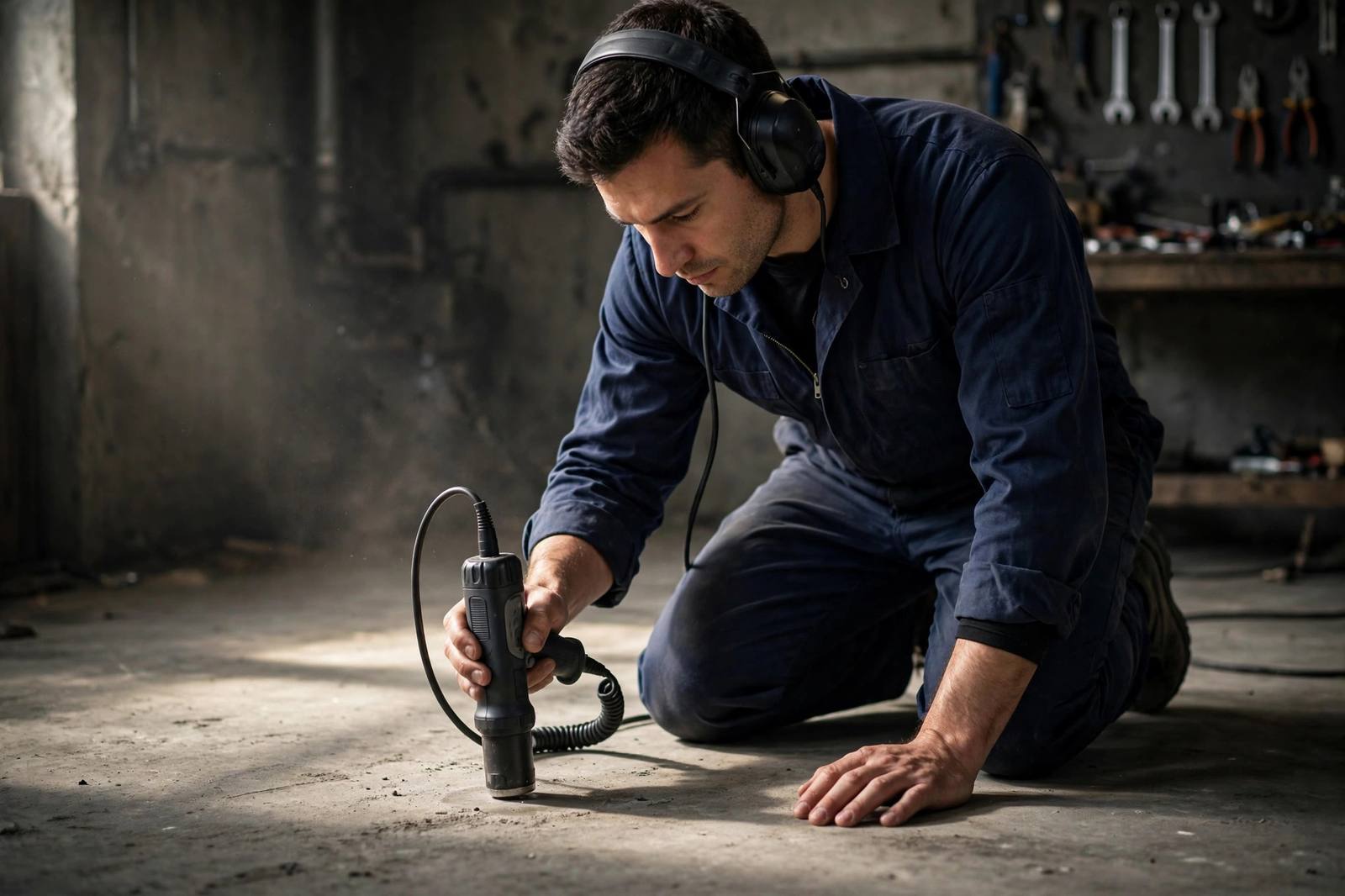
Guessing at a slab leak's location means jackhammering concrete until you get lucky — expensive, destructive, and completely unnecessary with modern equipment. Our Glendale detection visits start with a whole-house pressure and meter test to confirm you actually have a leak and to determine whether it's on a hot line, a cold line, or the sewer side, because each calls for a different strategy. From there we use electronic acoustic listening equipment: pressurized water escaping a pinhole makes a distinct high-frequency sound, and our sensors pick it up through the slab so we can trace the line's path and zero in on the loudest point. Thermal imaging cameras add the second layer — a hot-water leak warms the slab above it, and the camera paints that heat signature in real time, often narrowing the location to a patch the size of a dinner plate. For stubborn or very small leaks, we pressurize the suspect line with a safe tracer gas and sweep the slab with a sniffer that detects gas escaping through the concrete. Moisture meters and endoscopic cameras confirm the extent of saturation without opening anything up. In Glendale's caliche-heavy ground, sound travels a little differently than in softer soils, so our techs calibrate for local conditions rather than running a one-size-fits-all sweep. Most detection visits take 60 to 90 minutes, and you get a marked location, photos of the findings, and a written repair estimate — the precision that makes the actual fix fast and affordable.
Slab Leak Repair Options in Glendale
Once the leak is pinpointed, Glendale homeowners generally choose between three repair paths, and the right one depends on your pipe's age, the leak's location, and how many more leaks are likely coming. The direct-access spot repair is the simplest: we open the slab at the marked location, cut out the failed section of copper, and splice in new pipe. It's the fastest fix — usually done in a day — and makes sense when your plumbing is otherwise healthy and this looks like an isolated failure. Tunneling is the second option: instead of breaking your finished floor from above, we dig a small access tunnel under the slab from outside the foundation and repair the line from below. It's more labor, but your tile, wood, and carpet stay untouched, which matters a lot in homes with expensive flooring. The third path — and the one we recommend most often for older central Glendale homes with original 1960s copper — is a partial or whole-home reroute. We abandon the failing under-slab lines entirely and run new PEX or copper overhead through the attic and down interior walls. It costs more upfront, but it ends the cycle: homes with one pinhole leak in 50-year-old copper almost always develop more, and a reroute means you never break concrete again. For Arrowhead Ranch homes where the copper is younger, a spot repair or epoxy lining discussion usually comes first. We'll lay out all three options with honest pricing so you can decide based on your home's actual condition, not a one-size quote.
What Slab Leak Detection & Repair Costs in Glendale
Professional slab leak detection in Glendale typically runs $175 to $450 for a full diagnostic visit — pressure testing, acoustic location, thermal imaging, and a written repair plan. That visit pays for itself immediately, because pinpoint accuracy is what keeps the repair bill from ballooning. A straightforward spot repair, opening the slab at one marked location and replacing a short section of copper, usually lands between $2,200 and $6,500 depending on how deep the line sits, whether it's a hot or cold line, and what flooring has to come up and go back down. Tunneling from outside the foundation adds labor and typically runs higher than a top-down repair, but it saves your finished floors — in homes with tile or hardwood, the math often favors it. A whole-home reroute, abandoning old under-slab copper for new overhead PEX, generally falls in the $4,000 to $10,000+ range for a typical Glendale single-story, scaling with home size and fixture count. What drives cost most is delay: a leak caught in week one is a pipe repair; a leak that ran for six months is a pipe repair plus flooring, drywall, and mold remediation. Many Arizona homeowners policies cover the access and resulting damage (the tear-out and restoration) even when the pipe fix itself is excluded — check your policy's sudden-and-accidental language, and we'll document everything your adjuster needs.
What to Do When You Suspect a Slab Leak
First, confirm the basics: turn off every faucet, appliance, and irrigation valve, then watch your City of Glendale water meter for 15 minutes. If the dial moves with everything off, water is escaping somewhere — and under the slab is the prime suspect. Second, shut off your home's main valve if you see active flooding or hear a loud rush; stopping the flow limits soil erosion under the foundation, which is the damage that gets truly expensive. Third, document what you see: photograph damp spots, note which rooms have warm floors, and pull together recent water bills showing the spike — this paper trail helps enormously with insurance claims later. Fourth, don't run to a general handyman with a jackhammer; slab leaks demand electronic detection first, because every unnecessary hole in your slab is money and structural integrity you don't get back. Fifth, move valuables and rugs off damp flooring and, if you smell mustiness, run a dehumidifier — Arizona's EPA guidance treats 24 to 48 hours as the window before mold takes hold, even in our dry climate, because the slab cavity stays wet. Finally, call for same-day professional detection. Our Glendale techs arrive with acoustic and thermal gear, confirm the leak, mark the exact spot, and hand you a written estimate — usually within a single visit, so you can make a calm decision instead of an emergency one.
Get a Pinpoint Diagnosis in Glendale
No jackhammer guesswork. Thermal imaging + acoustic equipment finds your leak within inches.
☎ Call (877) 762-1902Glendale Slab Leak FAQs
How much does slab leak detection cost in Glendale, AZ?
A full professional detection visit in Glendale runs $175–$450. That covers pressure and meter testing, acoustic electronic listening, thermal imaging, and a written repair estimate with the leak location marked. It typically takes 60–90 minutes, and the precision it provides is what keeps the actual repair affordable — no exploratory jackhammering.
Will homeowners insurance cover a slab leak in Arizona?
Often partially. Most Arizona policies exclude the failed pipe itself (wear and tear) but cover the resulting damage — the cost of accessing the pipe through the slab and repairing flooring, drywall, and water damage. Sudden pipe bursts are covered more readily than slow pinhole leaks. Document everything and check your policy's sudden-and-accidental provisions.
How long does slab leak repair take in Glendale?
A direct spot repair is usually completed in one day. Tunneling repairs take one to two days. A whole-home reroute for aging copper typically takes two to four days depending on home size. Detection itself is a same-day, 60–90 minute visit, so most homeowners go from suspicion to confirmed diagnosis within 24 hours.
Does Glendale's hard water really cause slab leaks?
It's a major contributor. Glendale's very hard water attacks copper from the inside while the alkaline desert soil corrodes it from the outside — a two-sided assault that produces the pinhole leaks this area is known for. Homes on original 1960s–70s copper are the most vulnerable, but even 1990s-era tract copper is now old enough to start failing.
Can a slab leak damage my home's foundation?
Yes. Water escaping under pressure erodes the compacted soil and caliche supporting your slab, creating voids. Over months, sections of slab can settle or crack, doors start sticking, and flooring buckles. Glendale's monsoon-season saturation can accelerate this. Early detection is the difference between a pipe repair and foundation work.
Should I repair the leak or reroute my plumbing?
If your Glendale home still has its original 1950s–70s copper and you've had one pinhole leak, a reroute is usually the smarter long-term play — more leaks are almost certainly coming. For younger copper (1990s+) with an isolated failure, a spot repair or tunnel fix is typically the right, economical choice.
Nearby Cities
Keep Learning
Can a Slab Leak Cause Mold? Health Risks Explained
Can a slab leak cause mold? Yes — often hidden. Learn the EPA 24-48 hour growth window, health risks, warning signs, and the right…
Copper Pinhole Leaks Under Slabs: Repair or Repipe?
Copper pinhole leaks under your slab: what causes pitting corrosion, repair vs repipe costs, and how to decide. Real numbers for f…
Does Homeowners Insurance Cover Slab Leaks?
Does homeowners insurance cover slab leaks? Usually the water damage, not the pipe itself. What's covered, exclusions, claim tips,…