Slab Leak Detection & Repair in Houston, TX
Houston homeowners deal with slab leaks more than almost any other metro in Texas, and the reason sits right under your feet. The city is built on gumbo clay, a heavy expansive soil that swells after Gulf downpours and shrinks during dry spells, and that constant movement stresses every water line running beneath your slab. Add in decades of copper plumbing from the 1970s and 1980s building boom, periodic hurricane flooding, and a high water table, and Houston has all the ingredients for under-slab pipe failure. Our technicians provide same-day slab leak detection in Houston using acoustic listening, thermal imaging, and tracer gas, then pinpoint the exact leak location so repairs stay surgical instead of destructive. Whether you live in The Heights, Meyerland, Memorial, or Kingwood, one call gets a licensed pro to your door with flat-rate pricing and a written diagnosis you can trust.
Neighborhoods We Serve in Houston
The Heights, Montrose, Meyerland, Memorial, Bellaire, Westbury, Kingwood, Clear Lake, Spring Branch, River Oaks — and every ZIP code in between.
Why Houston Homes Get Slab Leaks
Houston sits on Beaumont clay, locally called gumbo, one of the most expansive soils in the country. It can swell dramatically when saturated and shrink hard in drought, and that seasonal heaving pushes and pulls on buried copper lines until fittings crack or pipes develop pinholes. Neighborhoods near bayous and in floodplains, like Meyerland and parts of Memorial, face added stress from stormwater saturation and high water tables that keep soil chemistry aggressive against copper year-round.
Why Houston Homes Are Prone to Slab Leaks
Few American cities punish buried plumbing the way Houston does. The gumbo clay beneath neighborhoods from Katy to Clear Lake moves with the weather, and Houston weather never sits still. A week of Gulf thunderstorms saturates the soil and it swells upward against the slab; a dry August bakes it and it pulls away, leaving voids where pipes lose support and flex at every joint. Over years, that flexing work-hardens copper until pinholes open, especially in homes plumbed during the 1970s and 1980s when copper was run directly under slabs with minimal sleeving. Hurricane flooding adds another layer of damage. After major storms, we see spikes in calls from Meyerland, Westbury, and Spring Branch, where saturated soils shifted foundations just enough to shear older connections. Even without a named storm, Houston's high water table keeps the ground around your pipes damp, and damp alkaline soil accelerates copper corrosion from the outside in. If your home was built between 1965 and 1995, your under-slab lines are now forty to sixty years old, which is exactly the window when Houston plumbers start finding failures. Newer homes are not immune either; PEX and CPVC lines resist corrosion, but poor bedding, rocks left in the trench, or settlement can still kink or abrade them. The takeaway is simple: in Houston, slab leaks are a when-not-if proposition for older homes, and catching them early is the difference between a targeted repair and a flooring replacement.
Signs of a Slab Leak in Houston Homes
The classic warning signs show up in Houston houses the same way they do everywhere, but local conditions give them a twist. A sudden jump in your water bill with no change in usage is the number one red flag; Houston Water bills make it easy to spot because usage history prints right on the statement. Warm or hot spots on tile or wood floors point to a hot-water line leak, and in Houston's slab-on-grade ranch homes those lines often run the longest distances under the slab. Listen for the sound of running water when every fixture is off, particularly at night when the house is quiet. Cracks in tile, buckling laminate, or damp carpet along baseboards deserve immediate attention, especially in Meyerland or Bellaire where past flooding can mask new moisture as old damage. Mildew smells that air freshener cannot fix, or a water heater that cycles constantly, round out the list. One Houston-specific clue: lush green patches in the yard during a dry spell can mean a supply line is leaking under the slab edge and feeding the lawn. Do not wait for visible pooling. By the time water shows itself, it has often been undermining soil support for weeks, and in gumbo clay that erosion accelerates because the soil washes out in channels. If two or more of these signs appear together, treat it as urgent and get an acoustic detection visit scheduled the same day.
How We Detect Slab Leaks in Houston
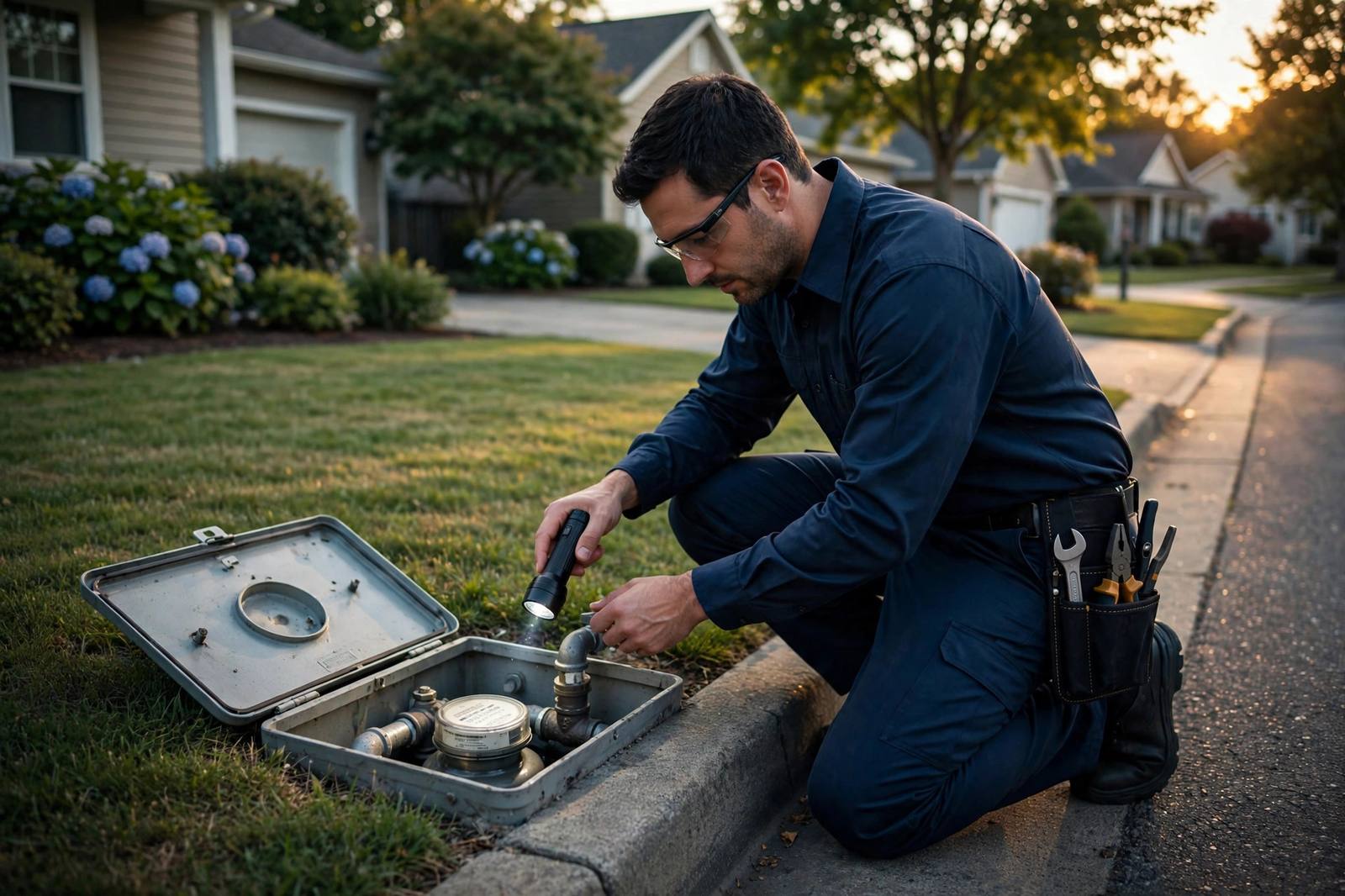
Accurate detection is everything, because a wrong guess means breaking concrete for nothing. Our Houston technicians start with your water meter. With all fixtures off, a spinning meter confirms a pressurized leak, and isolating the hot side versus the cold side narrows the search before any equipment comes out. Next comes acoustic listening. Using ground microphones and electronic headphones, the technician sweeps the slab listening for the high-frequency hiss of pressurized water escaping a pipe, a sound that carries through concrete and tile surprisingly well in quiet houses. Thermal imaging cameras then scan for the heat signature of hot-water leaks, which show as warm blooms on the floor, a method that works beautifully on Houston's ubiquitous tile floors. For tricky cases, we use tracer gas: the line is drained and filled with a safe hydrogen-nitrogen mix, and a sniffer detects where gas escapes through the slab, pinpointing leaks within inches even under thick post-tension slabs. Pressure testing individual line segments confirms the diagnosis before anyone picks up a jackhammer. The whole process typically takes one to two hours, and you get a written report with the leak location marked, photos of thermal scans, and a flat repair quote. That documentation matters in Houston, where insurance adjusters and foundation companies both want proof of exactly what failed and where.
Slab Leak Repair Options in Houston
Once the leak is located, Houston homeowners generally choose among four repair paths. Spot repair means opening the slab at the marked location, cutting out the failed section, and splicing in new pipe. It is the cheapest option and makes sense for a single isolated failure in an otherwise healthy system, common in newer PEX-plumbed homes. Tunneling is the Houston favorite for homes with expensive flooring. Instead of breaking the slab from above, technicians dig a tunnel beneath the foundation from outside, repair or replace the line from below, and backfill. Your tile, hardwood, and granite stay untouched, which matters in Memorial and River Oaks homes where flooring alone can cost more than the plumbing repair. Rerouting abandons the leaking under-slab line entirely and runs new PEX overhead through walls and attic, a smart move when the old copper system is failing in multiple places. Full repiping replaces every line and is the long-term answer for 1970s and 1980s homes where pinholes keep appearing; it costs more upfront but ends the cycle of repeat slab openings. Our technicians lay out all viable options with honest pricing and expected lifespan for each, because the right choice depends on your home's age, flooring value, and how many failures the system has already had. Whatever you choose, the work is permitted, pressure-tested, and backed by a written warranty.
What Slab Leak Detection and Repair Costs in Houston
In the Houston market, a professional leak detection visit with acoustic and thermal equipment typically runs $175 to $475, depending on home size and how many lines need testing. That fee is usually credited toward the repair if you hire us for the fix. Spot repairs on an accessible leak generally fall between $2,400 and $4,500 all-in, including concrete breakout, pipe repair, backfill, and patching the slab to a paint-ready finish. Tunneling costs more, usually $4,500 to $7,500, because of the hand-digging labor, but it preserves flooring that could cost $10,000 or more to replace, so it often wins on total project economics in higher-end homes. A hot-water reroute through the attic typically runs $2,800 to $5,500 depending on distance and how many fixtures the line serves. Whole-house repiping for a typical 2,000-square-foot Houston ranch lands between $7,500 and $15,000. Prices move with access difficulty, slab thickness, and whether asbestos-containing materials are present in older homes. Be wary of quotes far below these ranges; they usually mean no permit, no pressure test, or a handyman patching copper with a compression fitting that will fail again. Every quote we write itemizes labor, materials, permit fees, and restoration so you can compare apples to apples, and financing is available for larger repipes.
What to Do When You Suspect a Slab Leak in Houston
First, confirm the leak is real. Turn off every faucet, the ice maker, and the irrigation, then watch your water meter for fifteen minutes. If the dial moves, water is going somewhere it should not. Next, shut off the water heater's supply and check again; if the meter stops, the leak is on the hot side, which helps the technician and narrows the search area. Then call for same-day detection rather than waiting to see if it gets worse, because in Houston's clay it always gets worse. While you wait, move valuables off the floor near any damp areas, and if you see active water, shut the main valve at the meter to stop the damage and the billing. Take photos of any wet spots, cracked tile, or meter readings for your records; Houston insurance adjusters respond faster to documented timelines. Do not let anyone start jackhammering on a guess. A reputable company pinpoints first and breaks concrete second, and the detection visit costs a fraction of a misplaced slab opening. Once we locate your leak, you will have a marked location, thermal images, and a flat quote, usually within two hours of our arrival. From there the repair can often be scheduled within days, and most Houston slab repairs are completed in a single day once the plan is set.
Get a Pinpoint Diagnosis in Houston
No jackhammer guesswork. Thermal imaging + acoustic equipment finds your leak within inches.
☎ Call (877) 762-1902Houston Slab Leak FAQs
How much does slab leak detection cost in Houston?
Most Houston homeowners pay $175 to $475 for a full detection visit using acoustic listening and thermal imaging. The visit usually takes one to two hours and includes a written report with the leak location marked. Many companies, including ours, credit the detection fee toward the repair cost when you proceed with the fix.
How long does slab leak repair take in Houston?
A straightforward spot repair is usually done in one day. Tunneling jobs take two to three days because of the hand excavation. A full reroute or repipe can take two to five days depending on home size. Permit inspections in Houston and Harris County can add a day or two of scheduling, which we coordinate for you.
Will homeowners insurance cover a slab leak in Texas?
Texas policies typically cover the resulting water damage, like ruined flooring, but not the pipe repair itself, which insurers classify as wear and tear. Sudden failures get better coverage than long-term seepage, so documenting when you first noticed symptoms and calling quickly strengthens any claim.
Which Houston neighborhoods get the most slab leaks?
We see the most failures in 1970s and 1980s subdivisions built on gumbo clay with original copper plumbing, including Meyerland, Westbury, Spring Branch, and parts of Katy and Cypress. Floodplain-adjacent areas carry extra risk because saturated soils shift foundations and shear older connections.
Is tunneling better than breaking through the slab?
Tunneling costs more in labor but leaves your flooring untouched, which makes it the better deal in homes with tile, hardwood, or stone worth thousands. Breaking through is cheaper and faster for single leaks under carpet or in garages. We quote both so you can compare true total costs.
Do you warranty slab leak repairs in Houston?
Yes. Spot repairs carry a multi-year workmanship warranty, and full repipes and reroutes come with extended warranties on both labor and materials. Everything is permitted and pressure-tested, and you get the warranty terms in writing before work begins.
Nearby Cities
Slab leak pros nearbyAustin
Slab leak pros nearbyCorpus Christi
Slab leak pros nearbyDallas
Slab leak pros nearbyEl Paso
Slab leak pros nearbyFort Worth
Slab leak pros nearby
Keep Learning
How Long Does Slab Leak Repair Take? Realistic Timelines
How long does slab leak repair take? Spot repairs: 1 day. Reroutes: 1-2 days. Tunneling: 2-4 days. Realistic timelines, costs, and…
How Plumbers Find Slab Leaks: 5 Detection Methods Explained
How do plumbers find slab leaks? Acoustic listening, thermal imaging, tracer gas, pressure tests and cameras explained — methods, …
Selling a House With a Slab Leak: Disclosure & Value
Selling a house with a slab leak? Learn disclosure rules, how leaks affect home value, repair-vs-as-is math, and the paperwork tha…