Slab Leak Detection & Repair in Miami, FL
Miami homes sit on slabs, not basements — and when a water line under that concrete starts leaking, the damage hides until the bill arrives. Across Little Havana, Coconut Grove, Kendall, and Doral, Slab Leak Detection Pros finds leaks under Miami homes with acoustic listening equipment and thermal imaging, pinpointing the break without tearing up your floors. Many homes in Miami-Dade were built in the 1960s through the 1980s with copper supply lines poured right into the slab; those pipes are now at the age where pinhole leaks become common, and Miami's mineral-heavy water only speeds the corrosion along. If your water bill suddenly jumped, a warm spot has appeared on your tile, or you hear water running when every faucet is off, call (877) 762-1902. We answer seven days a week and offer same-day slab leak detection service across the Miami area.
Neighborhoods We Serve in Miami
Little Havana, Coconut Grove, Wynwood, Brickell, Kendall, Doral, Westchester, Flagami, Little Haiti, Shenandoah — and every ZIP code in between.
Why Miami Homes Get Slab Leaks
Miami sits on porous limestone and sandy fill with a water table that can rise to within a few feet of the surface after summer rains. That saturated, mineral-rich ground holds moisture against foundation slabs and lets chloride-laden soil contact copper lines, accelerating pinhole corrosion from the outside while hard water attacks from the inside. Seasonal saturation also means slabs shift microscopically as groundwater levels rise and fall, stressing pipe joints. In neighborhoods like Coconut Grove and Westchester built on old fill, uneven settlement is common.
Signs of a Slab Leak in Miami Homes
Because almost every Miami home is built slab-on-grade, a leak under the foundation rarely shows itself as a puddle — the concrete soaks it up and the tile hides it. The first clue is usually financial: a water bill that climbs for no obvious reason. Miami-Dade Water and Sewer bills that jump 30 to 50 percent with no change in your routine almost always mean water is going somewhere it shouldn't. The second classic sign is a warm spot on the floor. If a section of tile in your Kendall ranch or your Shenandoah bungalow feels noticeably warmer than the surrounding floor, a hot-water line is likely leaking underneath and heating the slab. Listen for water too — stand quietly in the house and if you hear hissing or running water with every fixture off, take it seriously. Other signs include damp carpet edges, a musty smell that air fresheners can't fix, cracks appearing in tile grout or the slab itself, and the sound of your water meter spinning when nothing is running. In Brickell and Doral, where many homes sit on fill over former wetlands, we also see mold blooming along baseboards because the slab wicks moisture sideways for weeks before anyone notices. One Miami-specific wrinkle: tile floors, which dominate South Florida homes, hide early damage beautifully. By the time tile starts to tent or pop loose in Little Havana or Flagami, the leak has often been active for months. Don't wait for visible damage. If two or more of these symptoms line up, a professional leak detection visit costs a fraction of what a delayed repair will.
How We Detect Slab Leaks in Miami
Our Miami technicians use a layered approach that locates the leak to within inches — no exploratory jackhammering required. We start with a static pressure test on the home's water lines, which tells us whether the leak is on the hot side, the cold side, or in the sanitary drain system, and roughly how severe it is. That single test eliminates half the slab from consideration. Next comes acoustic listening: ultra-sensitive ground microphones that pick up the high-frequency sound of water escaping a pressurized pipe through concrete. In a quiet house this can be remarkably precise, and our techs are trained to distinguish a slab leak's signature from normal pipe noise, refrigerator hums, and the ambient rumble of a busy street like Flagler. Thermal imaging follows. An infrared camera reads the heat pattern of the slab surface, and a hot-water leak shows up as a warm bloom spreading from the break — particularly useful in Miami's tile-floor homes, where the tile conducts heat well and the contrast is easy to read. For cold-water or drain leaks, we run tracer gas — a safe hydrogen-nitrogen mix introduced into the line that escapes at the break and rises through the concrete, where a sensitive sniffer finds it. We finish with a camera inspection of accessible drain lines to rule out sewer-side problems. Most Miami detection visits wrap up in one to two hours, and you get a marked floor location plus a photo-documented report you can hand your plumber or your insurance adjuster.
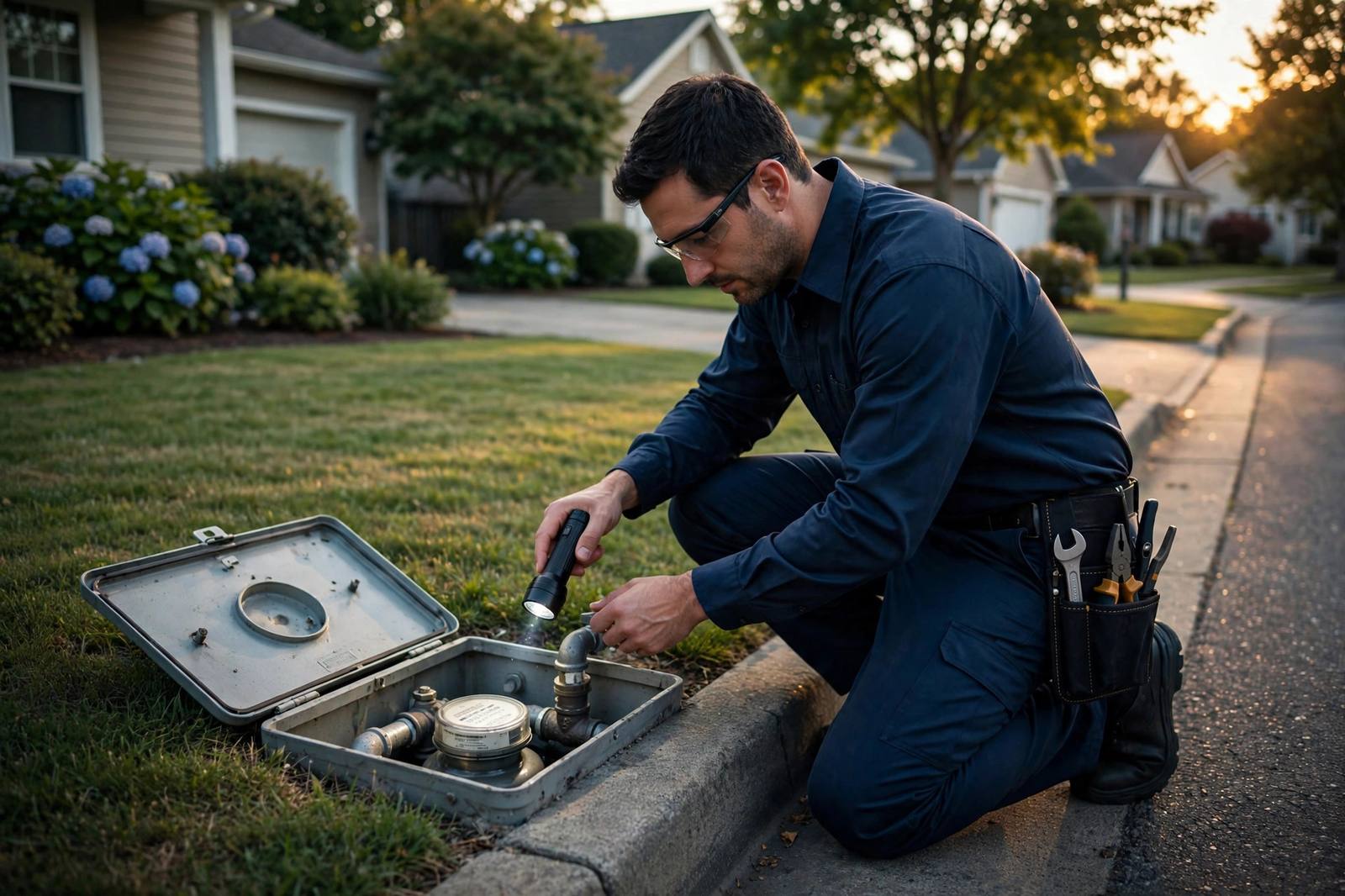
Why Miami Homes Get Slab Leaks
Miami's slab leak problem is really a collision of age, water chemistry, and ground conditions. Start with age: enormous stretches of Miami-Dade — Westchester, Kendall, parts of Doral, Little Havana — were built between the 1960s and 1980s with copper supply lines embedded directly in the concrete slab. Copper was the premium material of its era, but it has a lifespan, and in Miami's conditions that lifespan is shorter than the textbook number. Miami's municipal water is hard and mineral-heavy, and over decades it pits copper from the inside out — a process plumbers call pitting corrosion. Meanwhile the outside of the pipe sits in alkaline, moisture-saturated soil and fill that carries chlorides, which attack copper from the exterior. A pipe being eaten from both sides at once doesn't last. Then add the ground itself. Miami's water table is famously high, and after the summer rainy season or a tropical system, saturated soil swells and shifts. Slabs built on fill — common in Doral, Wynwood's industrial edges, and reclaimed areas near the bay — settle unevenly, and even a sixteenth of an inch of differential movement stresses rigid copper joints until one gives way. Finally, construction practices of the era didn't help: copper run through concrete without protective sleeving at every bend is vulnerable at exactly the spots where installers bent it tightest. Homes from the 1990s and 2000s usually have PEX or sleeved copper and fare far better — but if your Miami home predates 1990 and still has its original lines, a slab leak is a matter of when, not if.
Slab Leak Repair Options in Miami
Once we've pinpointed the leak, you have three realistic repair paths, and the right one depends on the pipe's age, how many leaks you've had, and your budget. Option one is a direct spot repair: we open a small, precise section of slab at the marked location — typically a two-by-two-foot area — cut out the failed section of pipe, and splice in new copper or PEX. In Miami this is the most common choice for a first leak in an otherwise healthy system, and it keeps cost and disruption lowest. The trade-off is honest: if the pipe is forty-plus years old, the next weak spot may fail a year or two later. Option two is a partial or full reroute: instead of opening the slab, new PEX lines are run through walls and the attic, bypassing the under-slab plumbing entirely. This is popular in Miami's single-story ranch homes in Kendall and Westchester, where attic access is easy, and it ends the slab-leak cycle for those lines permanently. It costs more than a spot repair but avoids ever jackhammering the slab again. Option three is epoxy pipe lining for drain-side leaks, which seals the inside of cast-iron or copper drain lines without excavation — useful in older Coconut Grove and Shenandoah homes where the sewer lateral under the slab is deteriorating. What we recommend against is letting a general handyman guess at the location and start breaking concrete; imprecise excavation in Miami's post-tension slabs (common in 1970s-80s construction) can cut tension cables and create a structural problem far worse than the leak. Every repair we quote includes the leak location report, and we stand behind the diagnosis before anyone picks up a saw.
What Slab Leak Detection & Repair Costs in Miami
In the Miami market, professional slab leak detection typically runs $150 to $450, depending on the home's size, how many bathrooms the system has, and whether drain-camera work is needed alongside the pressure and acoustic testing. Most single-family homes in neighborhoods like Flagami, Little Haiti, or Westchester land in the middle of that range; larger two-story homes in Doral or Coral Gables-adjacent areas with complex plumbing can push toward the top. Repair costs vary much more. A straightforward spot repair — open the slab, fix the pipe, patch the concrete — typically runs $2,200 to $6,800 in Miami-Dade, with the spread driven by how deep the pipe sits, whether it's a hot or cold line, and the cost of restoring tile or flooring over the patch. Full or partial reroutes through the attic generally run higher, often $4,000 to $10,000 for a whole-house hot-and-cold reroute, but they buy you decades of peace. Drain-side repairs under the slab are the wild card: $3,500 to $12,000 or more depending on length and access. Two honest cost notes. First, the water you're losing adds up fast — a moderate slab leak can waste thousands of gallons a month, so every month of delay is money on your Miami-Dade water bill. Second, homeowner's insurance in Florida sometimes covers the access and repair of the resulting damage (though usually not the pipe fix itself); our photo-documented reports are written to support those claims. We quote repairs flat and in writing before work begins, so there are no surprises.
What to Do When You Suspect a Slab Leak
If something in your Miami home is pointing at a slab leak, a calm sequence of steps protects both your house and your wallet. First, confirm the suspicion: turn off every faucet, appliance, and irrigation zone, then watch your water meter for fifteen minutes. If the dial or the leak indicator is still moving, water is escaping somewhere in the system. Second, check the easy wins — running toilets and dripping hose bibs can mimic a slab leak's symptoms on the water bill, so rule those out before assuming the worst. Third, don't start breaking concrete or calling a jackhammer crew on a guess. Miami's older slabs sometimes contain post-tension cables, and cutting one turns a plumbing repair into a structural emergency; even in conventional slabs, digging blind destroys flooring over a leak that might be six feet away. Fourth, call for professional detection: (877) 762-1902. We'll pressure-test the system, locate the leak acoustically and thermally, and mark the exact spot — usually within the same day. Fifth, photograph everything: the meter reading, any damp spots, warm floor areas, and cracks. If you file an insurance claim, dated photos matter. Finally, once the leak is located, get the repair in writing with a flat price before work starts, and ask whether the repair includes concrete and flooring restoration or just the pipe fix. In Miami's humid climate, mold can start within 48 hours of sustained moisture, so treat a confirmed leak as urgent — but treat an unconfirmed suspicion as a detection job, not a demolition job.
Get a Pinpoint Diagnosis in Miami
No jackhammer guesswork. Thermal imaging + acoustic equipment finds your leak within inches.
☎ Call (877) 762-1902Miami Slab Leak FAQs
How do I know if I have a slab leak in my Miami home?
The classic signs are a suddenly high water bill, a warm spot on the tile floor, the sound of running water when everything is off, damp carpet edges, or musty smells. The definitive check is your water meter: with everything off, if it still moves, you have a leak somewhere. Professional acoustic and thermal detection then pinpoints whether it's under the slab.
Why are slab leaks so common in Miami?
Most Miami homes are slab-on-grade with copper pipes poured into the concrete during the 1960s-80s building boom. Those pipes are now reaching end of life, and Miami's hard, mineral-heavy water corrodes copper from the inside while the high water table and chloride-rich soil attack it from the outside. Tropical-storm soil shifting adds stress on top.
Does slab leak detection damage my floors?
No. Professional detection is completely non-invasive — we use pressure testing, acoustic microphones, thermal imaging, and tracer gas, all from the surface. The only opening made is a small, precise cut at the confirmed leak location when the actual repair happens, typically about two feet square.
Will my homeowner's insurance cover a slab leak in Florida?
Florida policies often cover the resulting water damage and the cost of accessing the leak (like opening the slab), though the pipe repair itself is frequently excluded as wear and tear. Our reports include dated photos and a documented leak location, which is exactly what adjusters need. Check your policy's plumbing and foundation exclusions.
How long does slab leak detection take in Miami?
Most Miami homes take one to two hours from arrival to a marked, photo-documented leak location. Larger homes with multiple bathrooms or combined supply-and-drain investigations can take a bit longer. We offer same-day service across Miami-Dade — call (877) 762-1902.
Should I repair the leak under the slab or reroute the pipes?
For a first leak in younger plumbing, a spot repair under the slab is usually the economical choice. If your Miami home has 1960s-80s copper and you've had more than one leak, an attic reroute with PEX typically costs more upfront but ends the cycle — no more slab openings, ever. We lay out both options with flat pricing so you can decide.
Nearby Cities
Keep Learning
Can a Slab Leak Be Fixed Without Breaking Concrete?
Can a slab leak be fixed without breaking concrete? Yes. Rerouting, epoxy lining, and tunneling explained with real costs, timelin…
Hot Spot on Your Floor? How to Tell If It's a Slab Leak
Warm spot on your tile or floor? Learn how to tell if it's a hot water slab leak — DIY confirmation tests, pro detection, repair o…
How Long Does Slab Leak Repair Take? Realistic Timelines
How long does slab leak repair take? Spot repairs: 1 day. Reroutes: 1-2 days. Tunneling: 2-4 days. Realistic timelines, costs, and…